

Gariseb takes girl child dignity to next level
For social justice activist Shaun Asprilla Gariseb, the decision to make reusable sanitary pads did not begin with a business plan or a sewing machine. It began with a realisation that simply donating sanitary products was not enough to address the challenges faced by girls in rural and conservative communities. Gariseb said his journey started... The post Gariseb takes girl child dignity to next level appeared first on New Era .
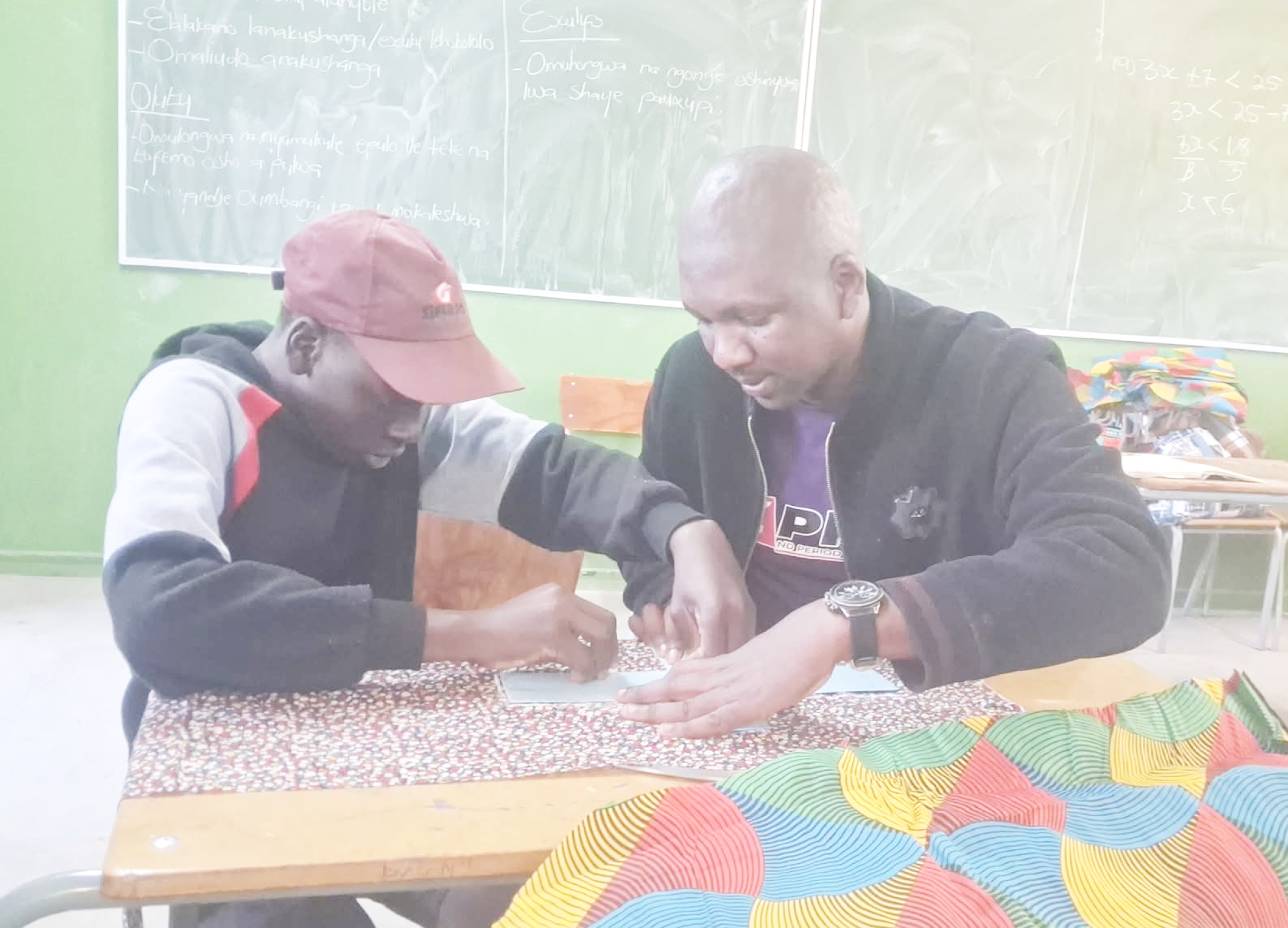
For social justice activist Shaun Asprilla Gariseb, the decision to make reusable sanitary pads did not begin with a business plan or a sewing machine.
It began with a realisation that simply donating sanitary products was not enough to address the challenges faced by girls in rural and conservative communities.
Gariseb said his journey started after visiting communities in the Kunene and Khomas regions, where his team would distribute sanitary pads to girls who struggled to access menstrual products.

“We realised giving these people boxes of pads was a short-term solution,” Gariseb said.
The initiative, which started in 2021, was initially focused on visiting schools and helping girls in communities where sanitary products were not readily available.
But Gariseb said the team did not want their work to become another campaign where organisations distribute products, take photographs and leave.
“We did not just want to hand out pads, take pictures and go. We wanted everlasting impact on these communities we were visiting,” he said.
“That led to a much bigger initiative, like giving them skills to do their own pads where they weren’t available,” he added.
Gariseb, who describes himself as an activist, said his experiences while travelling through different communities exposed him to the extent of the problem.
“I have been an activist, so I saw so many communities as I was moving and girls staying away from schools because of the stigma,” he said. The experience also convinced him that menstrual health could not be treated as an issue affecting girls alone.
“We wanted to help the girl child, to inform the boy child and better his understanding so he doesn’t make fun of ladies,” Gariseb said.
He said the initiative was therefore built around four pillars: helping the girl child, educating the boy child, ensuring consistency and creating an impact in communities.
2023
The scale of the need became particularly evident in 2023 when the group visited Kwanangombe.
“When we went to Kwanangombe in 2023, 500 girls went there to benefit from what we were offering,” Gariseb said. For him, the turnout was another indication that the problem required more than periodic donations.
This is where reusable sanitary pads became central to the initiative.
“We placed emphasis on reusable pads because we felt that with that we teach the girls a skill they can have and keep for long,” he said.
Gariseb said the objective was to give girls something that could provide a longer-term solution rather than relying on disposable products that would eventually run out.
“That would be like a long-term solution for these girls,” he said.
Gariseb admitted that he initially did not know how to make reusable sanitary pads.
“I never knew how to do this,” he said. The group was taught how to make reusable pads through sewing at Jacob Marenga Secondary School in 2022.
“In 2022, we were taught how to make reusable pads by sewing at Jacob Marenga,” he said.
The initiative has since continued to explore alternative methods of production.
“In 2026, we were taught an upcoming method which is a much easier way to make reusable pads in a more environment-friendly way,” Gariseb said. For him, the process represents more than simply producing sanitary products.
“It’s such a lovely way of solving the problem,” he said.
Turning point
However, turning the idea into a sustainable initiative has not been easy. Gariseb said machinery remains one of the biggest obstacles to expanding production.
“The biggest challenge was and is machinery,” he said.
“To knit your conventional reusable pads, you need machinery. To make your modern pads you need standard machinery.”
Despite the challenge, the initiative has continued through self-funding and support from people around Gariseb.
“We have funded ourselves for the longest time and relied on donations from our friends and family,” he said.
Among those he credits for encouraging him not to give up are artist Damara Dik Ding, from the Baton Matongo family, television and radio personality Jane Kandetu, and the Children’s Movement led by Kenneth Abraham.
Gariseb said the initiative has also had to navigate communities where menstruation remains a sensitive or taboo subject, particularly when men attempt to lead conversations about it. But he believes that is precisely why men and boys need to be part of the conversation.
The initiative uses youth groups, dramas, storytelling and dance during some of its activations to make conversations around menstruation easier for communities to engage with.
“Our group with the youth group consists of 45 people,” Gariseb said.
The activities are intended to tackle what Gariseb sees as a much bigger issue than simply the inability to afford sanitary pads.
“Many girls miss several days of school each month or drop out entirely due to period poverty,” he said. Gariseb said the problem is compounded by “a lack of clean water, private toilets, and menstru