
politics · Khomas
Swapo@66: Governing without ideology or a drift and the limits of liberation politics?
A crisis not of power, but of thought. After the thought-provoking editorial penned down by the Windhoek Observer on the occasion of the 66th anniversary of Swapo, one could not help but admire the accuracy of the analysis, especially when it refers to a drift and a loss of intellectual compass, ideological clarity, and, perhaps most dangerously, its sense of purpose, said the editorial.
Windhoek Observer24 Apr 2026, 02:45 am
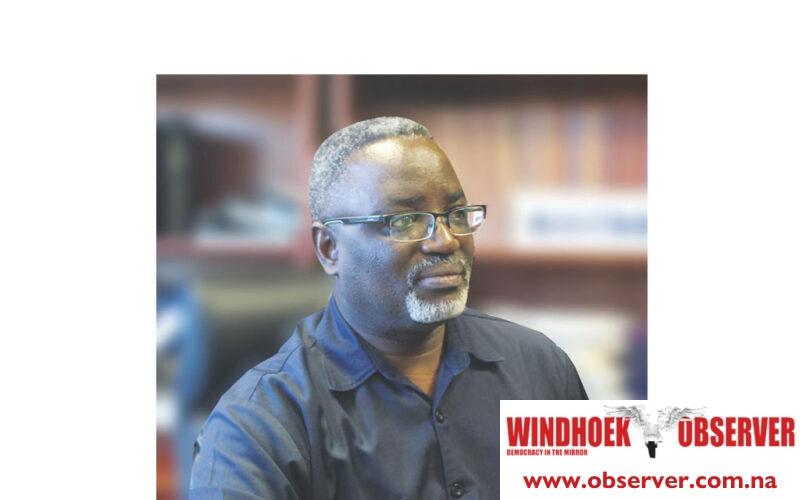
Paul T. Shipale (with inputs by Folito Nghitongovali Diawara Gaspar) A crisis not of power, but of thought. After the thought-provoking editorial penned down by the Windhoek Observer on the occasion of the 66th anniversary of Swapo, one could not help but admire the accuracy of the analysis, especially when it refers to a drift and a loss of intellectual compass, ideological clarity, and, perhaps most dangerously, its sense of purpose, said the editorial. Indeed, for a party that once embodied ideological clarity, rooted in anti-colonial struggle, social justice, and a defined vision of economic transformation, it now appears ideologically adrift. It really seems that somewhere between being a liberation movement and a governing party, Swapo has lost the plot, as it is no longer the revolutionary vanguard it once was but not quite a modern, policy-driven political party either. The consequences of this drift are not theoretical, but they are playing out in real time. Suffice it to look no further than the fragmentation of the political landscape where virtually every significant opposition force today is a splinter of Swapo’s own making, such as the Independent Patriots for Change, the Affirmative Repositioning, and the Landless People’s Movement, which are not born in ideological opposition but in internal contradictions that have broken away. That should alarm anyone who cares about the health of Namibia’s democracy, said the editorial, and one should add here, anyone who cares about the party of the Nujomas, Ya Toivo, Moses Garoeb and many others, because when a ruling party begins to haemorrhage its own thinkers, its own activists, and its own ideological energy, what remains is often a hollow shell, held together not by ideas, but by inertia and patronage. Namibia’s current political moment is widely interpreted through the lens of electoral resilience. Swapo remains dominant. The state is stable. Opposition forces, while growing, have not displaced the ruling party. But this reading is superficial. The deeper crisis is not electoral. It is intellectual. Political parties rarely decline because they lose power first. They decline because they lose the capacity to produce ideas or coherent frameworks that connect historical identity to present realities and future strategy. When that happens, governance continues, but direction dissolves. That dissolution is now visible in Namibia. The gap between political language and material reality is widening. Policy announcements accumulate, yet they fail to cohere into a recognisable national project. Economic outcomes contradict stated ambitions. Strategic decisions appear episodic rather than anchored in doctrine. This is not a communication problem. It is a failure of political thought and its consequences are structural. From ideological clarity to conceptual drift Swapo was never merely an administrative entity. It was a liberation movement forged in anti-colonial struggle, grounded in a clear ideological posture against imperial domination and for national unity. That clarity was embodied in the vision of the founding father, H.E. Dr Sam Nujoma and crystallised in the motto of solidarity, freedom and justice as well as in the principle of “One Namibia, One Nation”. That ideological coherence performed a historic function that mobilised, unified, and legitimised. But liberation ideology is not self-executing in a post-independence state. It must be translated into a developmental doctrine, one that defines the following: • how resources are governed • how industrialisation is pursued • how sovereignty is exercised in a global system That translation has been partial at best. Instead, Namibia has entered a phase of conceptual drift: • Liberation ideology is preserved symbolically but not operationalised • Historical legitimacy is invoked but not strategically updated • Policy adapts pragmatically but without an overarching framework This is not ideological evolution. It is ideological evaporation. Intellectual stagnation as the core constraint At 66, Swapo faces a fundamental limitation, and it no longer produces ideas adequate to governing a complex, post-liberation economy. This stagnation is not abstract, but it manifests in concrete policy contradictions. 1. No coherent economic doctrine Namibia continues to rely heavily on extractive industries, particularly mining, yet lacks a clearly articulated beneficiation strategy. Resource extraction proceeds without a codified national framework ensuring value addition, technological transfer, or industrial deepening. The result is growth without transformation. 2. Strategic ambiguity in global engagement Namibia engages multiple international partners across a shifting global order. But engagement is not the same as strategy. There is no clearly defined national doctrine guiding how partnerships translate into leverage, industrial capacity, or economic sovereignty. In practice, this risks reproducing dependenc
Read the full story at Windhoek Observer