

Behind Otjiwarongo’s top fish, vetkoek container … how ‘Tate Fish’ turned hardship into business
Selma Shiwaya At 02h00, while much of Otjiwarongo is still wrapped in darkness and most residents are deep in sleep, Joseph Ndatipo is already awake. For him, the day does not begin when the sun rises. It begins in the quiet hours of the morning when he prepares the food that will eventually take him... The post Behind Otjiwarongo’s top fish, vetkoek container … how ‘Tate Fish’ turned hardship into business appeared first on New Era .
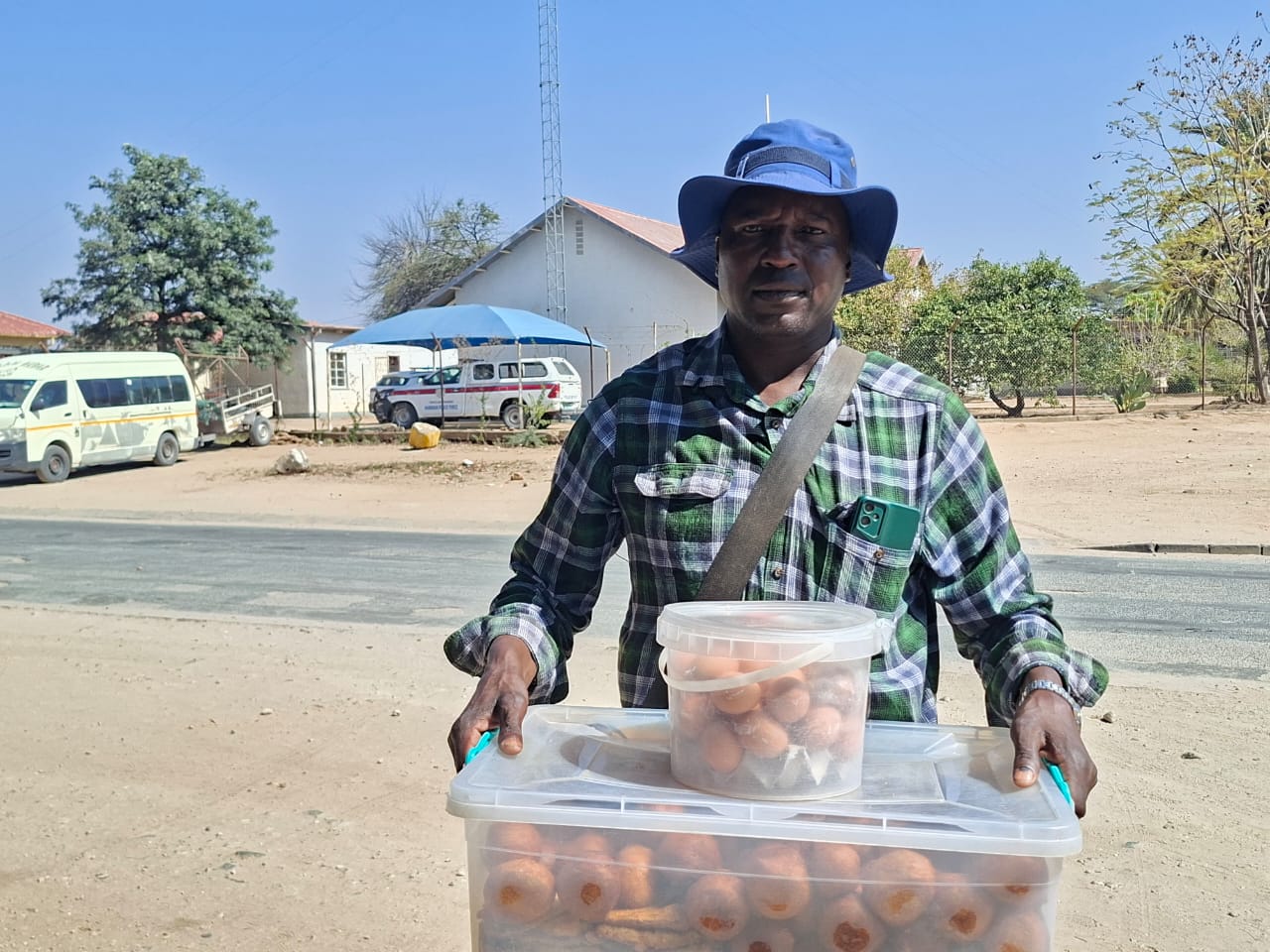
At 02h00, while much of Otjiwarongo is still wrapped in darkness and most residents are deep in sleep, Joseph Ndatipo is already awake.
For him, the day does not begin when the sun rises. It begins in the quiet hours of the morning when he prepares the food that will eventually take him through the streets of Otjiwarongo and into the hands of hundreds of customers.
By 05h00, the vetkoek are ready, and the fish is cleaned, seasoned and fried. Everything is packed and prepared for the day ahead. “On days when I have an assistant, I pack the fish and vetkoek in their container, and I send them off to go sell at the hospital entrance while I prepare to go sell around town,” says Ndatipo. The routine has become synonymous with his life.

He lifts his container and begins walking.
Otjiwarongo
To many residents of Otjiwarongo, he is no longer simply Joseph Ndatipo.
He is ‘Tate Fish’.
The name has become so familiar that some customers do not even know his real name.
They know him by the container he carries, the fried fish he sells and their favourite vetkoek.
But behind that container is a story that stretches far beyond the streets of Otjiwarongo.
It is a story of a young Namibian who left home in search of opportunity, travelled to South Africa believing he had found a better life, experienced humiliation and fear, built a business from almost nothing, lost everything in less than an hour and eventually returned home, determined to start again.
Today, the same man who once owned a thriving shebeen in South Africa walks the streets selling fish and vetkoek.
“If it weren’t for the suffering I endured in South Africa, I wouldn’t be carrying a container of vetkoek selling around town,” Ndatipo said.
There is pain in those words, but there is also acceptance and, most importantly, hope.
Journey
Ndatipo’s journey began in 1996 when he left Outapi for Walvis Bay, at the age of 19, in search of employment.
Like many young people looking for an opportunity, he arrived with little more than determination.
After about a week of searching for work, his persistence paid off when he found a temporary job assisting at a construction site.
When the project ended, Ndatipo did not return home.
He saved the little he had earned and kept looking for another opportunity. Two weeks later, he decided to try something different.
After watching others sell fried fish, he began doing the same.
“I wanted to continue doing business, but by then I had also learned construction work,” he recalled. Whenever construction jobs were available, he worked.
When they were not, he sold fish.
That was the beginning of his love for business.
In 2003, while working in Walvis Bay, another opportunity came his way.
He was promised greener pastures in South Africa and told that life across the border was better and jobs paid well. Believing he was heading towards a better future, Ndatipo travelled to Transvaal. But what awaited him was not the life he had imagined.
Among the people he met was an elderly Mozambican man who worked for the household that employed him.
A neighbour began asking Ndatipo how he had arrived in South Africa and what he knew about the people he worked for.
The neighbour warned him to be careful about the work he was being asked to do.
Soon after, Ndatipo witnessed something that confirmed the warning. He saw his employer brush the Mozambican man’s face with a broom soiled with dog faeces.
The incident shocked him and brought the neighbour’s warning back to mind. “From that moment, and after reflecting on what the neighbour told me, I knew I had to leave,” he said.
With the neighbour’s help, Ndatipo escaped from Transvaal and made his way to Cape Town, where he knew people.
Cape Town
In Cape Town, Ndatipo found work at sea, but his entrepreneurial spirit remained. He later began selling a traditional brew after learning from locals.
Although it sold for only R2 a jar, he understood a lesson that guided him since his Walvis Bay days: small earnings can grow if they are reinvested.
Ndatipo saved and expanded the business.
Eventually, it was enough for him to buy a pool table and a jukebox.
For a while, he believed he had finally found the success he had been seeking. Then, in 2016, he lost everything he had worked so hard to build.
He still remembers the day with deep pain.
His business was looted, and what had taken years to build was destroyed in about 40 minutes.
“They came like birds eating seeds,” he said, describing how quickly the looters descended on his business.
“Everything was taken while I stood there watching,” Ndatipo added.
Years of work vanished before his eyes. For him, the loss was more than financial.
It was the collapse of a dream.
“If I had built that in Namibia, I would have been a better person now. I would not be selling vetkoek like this today. It still hurts me that I lost so much that I worked hard for. But I believe that one day I will accomplish wh