
Share of Sources of Electricity for Namibia
Namibia has always been a net electricity importer, mainly from South Africa, with the local generation share largely determined by Ruacana. Namibia produced 51.6% of its own electricity in 2025 and 52.2% in the first five months of this year, just above the long-run January to May average of 50.1%. That average can be misleading, […] The post Share of Sources of Electricity for Namibia appeared first on The Namibian .
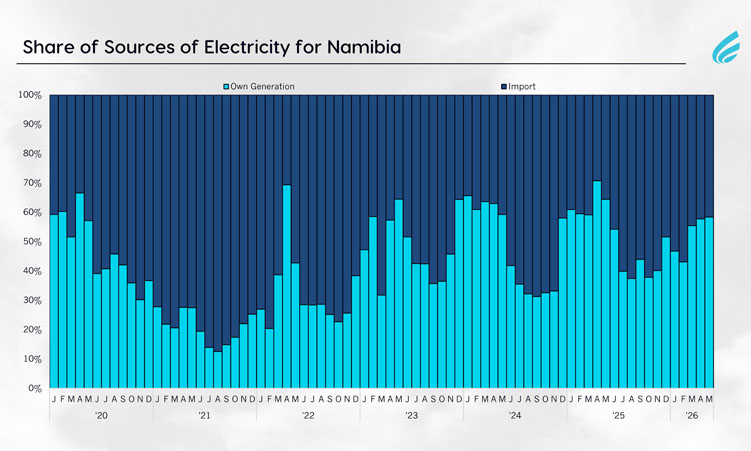
Namibia has always been a net electricity importer, mainly from South Africa, with the local generation share largely determined by Ruacana.
Namibia produced 51.6% of its own electricity in 2025 and 52.2% in the first five months of this year, just above the long-run January to May average of 50.1%.

That average can be misleading, as in the past five years alone, Namibia’s average local generation ranged from 25% in 2021 to a recent high of 62.9% in 2025.
Ruacana has no reservoir of its own, so it generates only when there is water coming down the Kunene River, and roughly 87% of that river’s catchment lies in Angola. Namibian rainfall is close to irrelevant to it. Angolan rain falls between November and April and reaches the station with a lag, which is why the chart peaks every year between February and May and then declines through winter.