
Strangled by Plastic: The Silent Struggle of Seals
Marine life along Namibia’s coastline is rich and diverse. The nutrient-rich Benguela Current supports fish, dolphins, whales, seabirds, seals and many more. However, these animals face many threats, and one of the biggest is plastic pollution. Every year, an estimated eight to 13 million tonnes of plastic enter the ocean. Although Namibia’s beaches may look […] The post Strangled by Plastic: The Silent Struggle of Seals appeared first on The Namibian .
Marine life along Namibia’s coastline is rich and diverse. The nutrient-rich Benguela Current supports fish, dolphins, whales, seabirds, seals and many more.
However, these animals face many threats, and one of the biggest is plastic pollution.
Every year, an estimated eight to 13 million tonnes of plastic enter the ocean.
Although Namibia’s beaches may look clean compared to many other countries, the work of Ocean Conservation Namibia (OCN) shows that plastic pollution is a serious problem along our coast and in the waters of the Benguela, much of it is hidden beneath the surface.
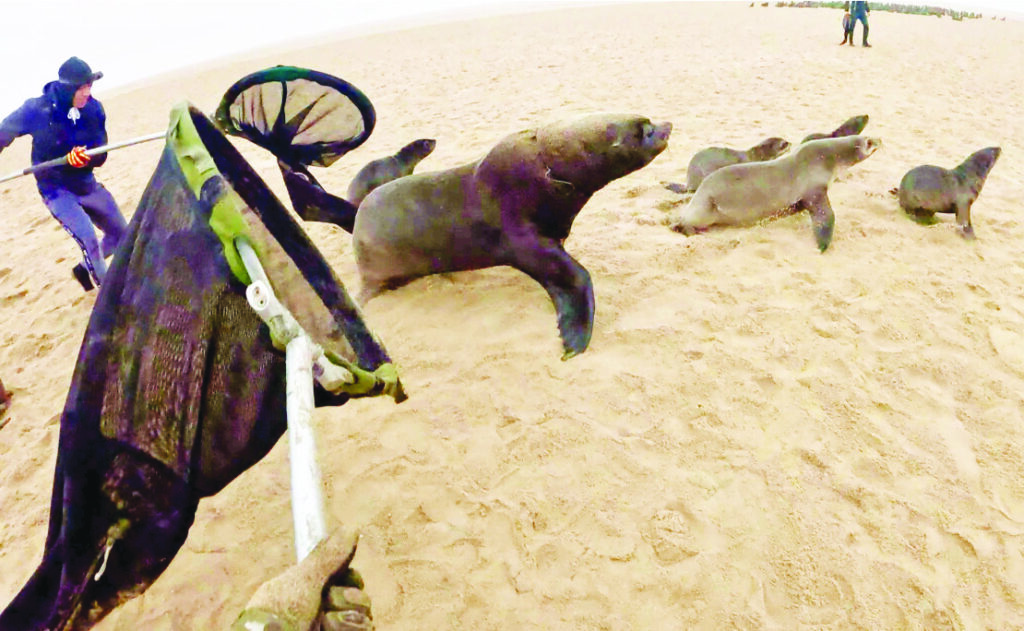
OCN rescues Cape fur seals entangled in plastic and other marine debris. Around 1.4 to 1.6 million Cape fur seals live in Namibian waters, making it the largest population in the world.
Cape Cross is home to the world’s largest single colony, with up to 200 000 seals during peak season.