
Namibia endorses SADC development fund
President Netumbo Nandi-Ndaitwah said Namibia must build the skills and industrial capacity needed to process its minerals and agricultural products if the country is to benefit fully from the Southern African Development Community (SADC)’s new drive for regional industrialisation. Nandi-Ndaitwah said the regional bloc had moved beyond broad commitments on industrialisation and was now identifying... The post Namibia endorses SADC development fund appeared first on New Era .
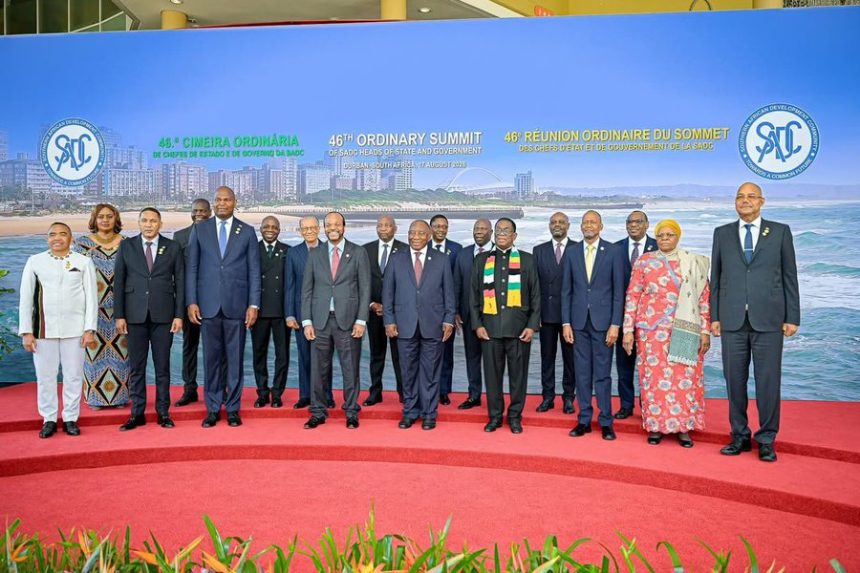
President Netumbo Nandi-Ndaitwah said Namibia must build the skills and industrial capacity needed to process its minerals and agricultural products if the country is to benefit fully from the Southern African Development Community (SADC)’s new drive for regional industrialisation.
Nandi-Ndaitwah said the regional bloc had moved beyond broad commitments on industrialisation and was now identifying specific products that member states could produce locally to reduce imports and increase exports of finished goods.
She was speaking to the media at the airport after returning from the 46th SADC Summit in Durban, South Africa, on Tuesday.

“The SADC 46 Summit was very successful, I can say, because the main theme is really the regional integration based on the SADC strategic programmes,” Nandi-Ndaitwah said.
She stated that industrialisation was one of the three key pillars discussed at the summit.
The region identified areas where member states could increase production and value addition. “Under that pillar, the region has now identified some of the areas that we can start in, or goods, I can say, in order for us to reduce the importation and also to see which ones we can increase in terms of export, particularly the finished product,” she said.
The President said this approach was particularly important because the country’s economy is heavily dependent on minerals.
She said Namibia should not remain primarily an exporter of raw minerals while importing products made from those same resources. “In Namibia, we must have Namibians who are able to do that. If it’s the second layer of value additions to copper, we should be able to do that. So, today, for us to benefit from the industrialisation programme, we must build our capacity, which is very key,” Nandi-Ndaitwah said.
She added that Namibia’s mineral wealth gives the country an opportunity to strategically position its mining sector to benefit from SADC’s industrialisation programme. “In Namibia, you know that our economy is mineral-based, and we can strategically position ourselves to have our mining sector be properly managed so that we’ll be able to benefit from the southern industrialisation programme,” she said.
The former president also linked industrialisation to education and skills development, saying the region would need a properly trained workforce to participate in emerging value chains.
“The other pillar is for social and capital development. Now that SADC is talking about industrialisation, we are talking about value chains. We have to invest in the education and training of our people,” she said.
The summit also agreed to advance the operationalisation of the SADC Development Fund, which Namibia has signed onto as part of efforts to mobilise resources for regional infrastructure, industrialisation and socio-economic development.
The summit communiqué called on countries that have not yet ratified the agreement to accelerate the process. Nandi-Ndaitwah said the fund was important because industrialisation would require substantial investment. “And that’s why we are now to start operationalising the SADC Development Fund. Some countries have not yet signed, but Namibia signed yesterday because we really need to mobilise resources for us to industrialise the region,” she said.
Infrastructure was identified as another major pillar, with Nandi-Ndaitwah highlighting regional corridors that connect Namibia to neighbouring markets.
She cited the Orange, Kunene, Trans-Kalahari and Trans-Caprivi corridors, saying Namibia wants its ports to become logistics hubs that support regional trade.
The summit communiqué also placed regional value chains, industrialisation, agricultural transformation, critical minerals, energy transition and economic corridors among the high-impact priorities for the region. Nandi-Ndaitwah said agriculture must form part of this transformation.
“It was really action-orientated that we must now seriously look for value addition, and we should not forget agriculture products to be part of the value chain,” she said.
The summit further called for increased regional trade in agricultural products by removing non-tariff barriers, harmonising standards and improving cross-border logistics to stabilise food supplies and prices.
Nandi-Ndaitwah said the Durban summit, therefore, provided a clear direction for SADC to move towards production, value addition and stronger regional trade rather than continuing to depend heavily on imports.
– ljason@nepc.com.na