
politics · Khomas
Airlines issued ultimatum to lower domestic airfare … put on notice to change pricing or risk intervention
Airlines operating in Namibia have been handed a blunt ultimatum to slash domestic airfares within six months or face direct government regulation. Delivering a sharply worded warning at the opening of Aviation Week Africa 2026 in Windhoek on Wednesday, Works and Transport Minister Veikko Nekundi made it clear that government patience has run out over...
New Era24 Apr 2026, 09:10 am
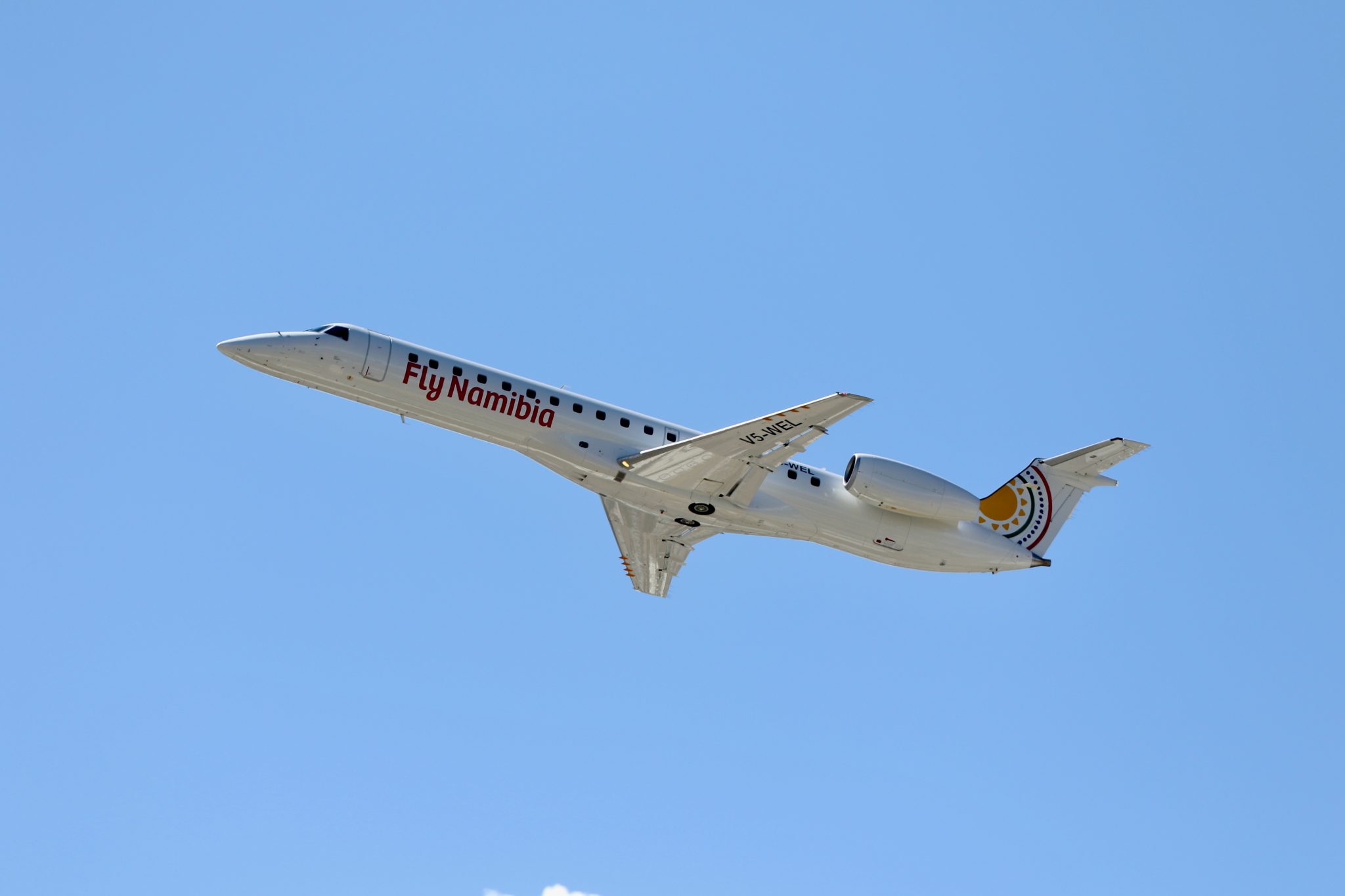
Airlines operating in Namibia have been handed a blunt ultimatum to slash domestic airfares within six months or face direct government regulation. Delivering a sharply worded warning at the opening of Aviation Week Africa 2026 in Windhoek on Wednesday, Works and Transport Minister Veikko Nekundi made it clear that government patience has run out over what he described as “unsustainable and unjustifiable” pricing in the domestic aviation market. “You must reduce these prices. Otherwise, you will force me to amend the law and regulate fares, as we do in the taxi industry,” Nekundi warned. “This situation cannot continue. You must bring the prices down. Either you act, or I will be compelled to regulate. You have six months to address this issue. If nothing changes, I will intervene,” Nekundi told the aviation industry gathering. The remarks mark one of the strongest public interventions yet by the government into Namibia’s aviation sector and signal a potential shift toward price controls if industry players fail to respond. Nekundi’s frustration stems from what he calls glaring inconsistencies in ticket pricing. He cited a recent example of a one-way flight to Ondangwa costing more than N$9 000. The minister described this amount as indefensible, particularly when compared to regional routes. “It cannot be that a domestic flight costs more than a regional flight,” he said, noting that trips to destinations such as Cape Town are often significantly cheaper despite covering far greater distances. The disparity has increasingly drawn public anger, with business travellers and ordinary Namibians alike questioning the affordability of air travel in the country where distances between major towns are vast, and road travel can be time-consuming. Nekundi’s six-month deadline effectively puts airlines on notice to recalibrate pricing models or risk sweeping regulatory intervention. While Namibia’s aviation sector has historically operated within a liberalised framework, Nekundi’s comments suggest the government is prepared to decisively step in if market forces fail to deliver equitable outcomes. His reference to the taxi industry, where fares are regulated, underscores the seriousness of the threat. Meanwhile, analysts note that regulating airfare could have far-reaching implications, reshaping competition dynamics and profitability in the aviation market. However, it may also bring relief to consumers who have long complained about prohibitively high fares. Ironically, Nekundi’s warning comes at a time when Namibia is positioning itself as a regional aviation hub, with ambitious plans to expand both aviation infrastructure and regional connectivity. In his address, Nekundi highlighted Namibia’s strategic role as a logistics gateway for landlocked neighbours such as Botswana, Zambia and Zimbabwe, as well as the broader Southern African Development Community (SADC). Namibia has also committed to the Single African Air Transport Market (SAATM), the flagship African Union initiative aimed at liberalising air transport across a continent where it is often more expensive and difficult to fly to neighbouring countries. “Air connectivity is the lifeblood of Africa’s economic and social development,” Nekundi said, stressing that improved aviation networks are essential for unlocking intra-African trade under frameworks such as the African Continental Free Trade Area. The minister’s warning highlights a fundamental contradiction: while Namibia is advocating for open skies and expanded connectivity, high domestic fares risk undermining these ambitions by limiting accessibility. Moreover, the government is simultaneously investing in aviation infrastructure to support its growth agenda. Nekundi pointed to ongoing upgrades at Hosea Kutako International Airport, including the construction of a third terminal, as well as plans to unveil a new national airline, Namibia Air. Additional investments in air navigation systems, including radar technology and advanced traffic management, are underway to enhance safety and efficiency. “These developments are critical to ensuring that Namibia remains competitive and capable of supporting increased air traffic,” Nekundi said. However, industry insiders note that infrastructure expansion alone will not resolve the affordability crisis if airlines continue to price domestic routes beyond the reach of most citizens. Nekundi’s six-month deadline now places airlines in a difficult position: to reduce fares and potentially absorb financial strain or resist and risk regulatory intervention that could impose even stricter controls. For consumers, the minister’s stance offers hope of relief in a market long criticised for its lack of affordability. For the aviation industry, it represents a defining moment that could determine the future structure of Namibia’s domestic air travel sector. As Aviation Week Africa 2026 continued in Windhoek, industry leaders, regulators and policymakers are expecte
Read the full story at New Era