
Restrictions threaten Zambian democracy – Observers
Election observers have called for calm in Zambia as the Electoral Commission of Zambia (ECZ) continues counting and verifying votes from the 13 August general election. They waned that restrictions on political freedoms, unequal campaign conditions and weaknesses in the electoral process affected the election. The call was made on Saturday, when the heads of... The post Restrictions threaten Zambian democracy – Observers appeared first on New Era .
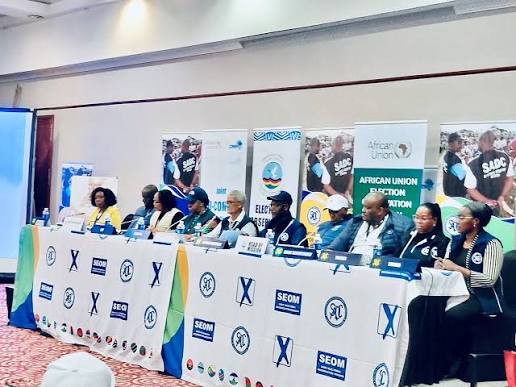
Election observers have called for calm in Zambia as the Electoral Commission of Zambia (ECZ) continues counting and verifying votes from the 13 August general election.
They waned that restrictions on political freedoms, unequal campaign conditions and weaknesses in the electoral process affected the election.
The call was made on Saturday, when the heads of the SADC, African Union- Common Market for Eastern and Southern Africa (AU-COMESA), International Conference on the Great Lakes Region (ICGLR) and Electoral Commissions Forum (ECF) observation missions presented their preliminary findings in Lusaka.

SADC Electoral Observation Mission (SEOM) head Samuel Tembenu said the election was largely peaceful, but concerns remained over the suspension of vote counting on Friday and the uncertainty that followed.
“The mission expressed particular concern over the uncertainty and anxiety that followed the temporary suspension of counting and announcement of results,” Tembenu said.
He urged political parties, their supporters and other stakeholders to remain calm, avoid violence and allow the electoral process to continue.
The SEOM observed 277 of Zambia’s 13 529 polling stations and found the atmosphere calm and peaceful at 275 of the stations it visited.
Tembenu said the mission also found positive aspects, including ECZ preparedness, transparent verification and custody of election materials and the functioning of conflict-management committees.
However, the mission raised concerns about the absence of dedicated legislation governing political parties, the timing and communication of electoral reforms, media freedom, the participation of women and persons with disabilities, electoral violence and the secrecy of the ballot.
The AU-COMESA mission also warned that the results process must be handled carefully. The mission said the integrity of the results depended on “adherence to the law, transparent communication by the ECZ and restraint by political actors from making premature declarations”.
It called on all stakeholders to remain calm, exercise restraint and allow the ECZ to complete the counting and verification process. The warning comes as Zambia waits for the final presidential results after the ECZ temporarily suspended counting on 14 August following security incidents.
The commission later resumed the process after saying the security situation had been contained.
European Union
The EU Election Observation Mission gave a more critical assessment of the broader political environment.
In its preliminary statement, the EU said: “The 13 August 2026 general elections were a test of Zambians’ democratic expectations”.
It further said the election was competitive, with candidates contesting presidential, parliamentary and local elections. It added that “fundamental democratic rights were, however, impacted by restrictions on the ability to campaign”.
The incumbent advantages blurred the line between state and political campaigning creating an uneven playing field,” EU said. The mission also criticised the media environment, saying State-owned media was heavily biased towards the ruling party.
It said self-censorship in traditional and social media had increased following the introduction of new cyber laws.
The EU observed that the election-day process itself was generally calm. It monitored voting at 419 polling stations, counting at 38 stations and tabulation at 47 constituency-level centres.
“Election day was calm overall, with polling staff efficiently facilitating voting,” the EU said. He added that ballot counting was transparent in the presence of party and candidate agents. However, the mission reported several operational problems.
It found overcrowding at 9% of polling stations observed, while essential materials were missing at 25% of stations.
It also found that only 41% of polling stations observed were accessible to people with reduced mobility. The EU further raised concerns about women’s participation. Women accounted for only 9% of candidates across all levels of the elections, while gender-based harassment was reported against some female candidates.
The observers nevertheless stressed that their statements are preliminary, and that the election process is not yet complete.
The EU said its final assessment would depend partly on the completion of vote tabulation and the handling of post-election complaints and appeals.
The ICGLR mission, led by former Botswana president Mokgweetsi Masisi, also called for restraint after engaging political leaders when tensions increased.
“De-escalate tensions, refrain from premature announcements and inflammatory language, respect the rule of law and allow the lawful electoral process to continue,” the mission urged the ruling party and opposition.
The SADC mission is expected to issue its final report within 30 days of its preliminary statement.
-ljason@nepc.com.na