

Sankwasa wants pensioners’ debt deleted … councils given deadline
Auleria Wakudumo Urban and Rural Development minister James Sankwasa has called for outstanding municipal debts owed by pensioners, deceased residents and destitute persons to be submitted for possible write-off. The directive formalises a call Sankwasa had made to councils earlier this year. The directive was issued to local authorities on Monday, giving councils until... The post Sankwasa wants pensioners’ debt deleted … councils given deadline appeared first on New Era .
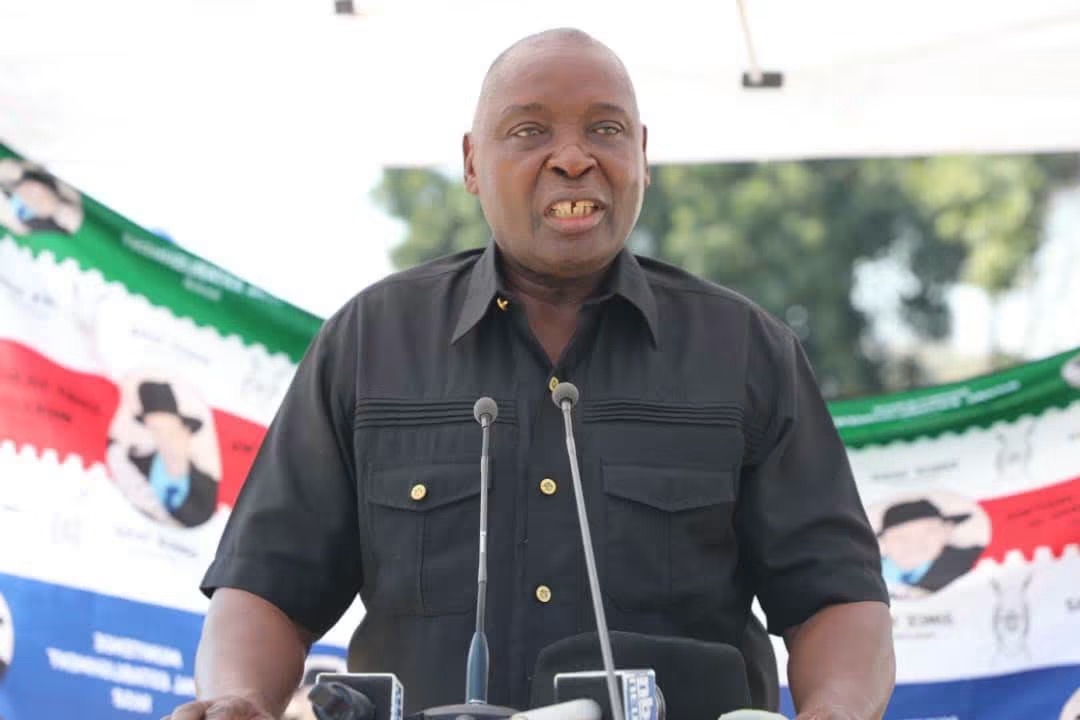
Urban and Rural Development minister James Sankwasa has called for outstanding municipal debts owed by pensioners, deceased residents and destitute persons to be submitted for possible write-off.
The directive formalises a call Sankwasa had made to councils earlier this year. The directive was issued to local authorities on Monday, giving councils until 31 August 2026 to submit comprehensive and verified information on debts considered irrecoverable.
Sankwasa had already directed local authorities in January to submit outstanding municipal accounts belonging to pensioners and persons living with disabilities for possible debt relief.

At the time, he said many of the debts had accumulated during the Covid-19 period, when councils were instructed not to disconnect residents from basic services. The latest circular expands the exercise to include debts owed by deceased residents and persons classified as destitute.
Councils have been instructed to provide the debtor’s full name, account number or property description, category of debtor, the period for which the debt has been outstanding and the principal amount owed.
They must also provide details of interest, penalties and other charges, as well as supporting documents explaining why the debt should be considered for write-off.
For deceased residents, councils must provide death certificates where available, while pensioners must provide documentation confirming their status.
However, the minister has stressed that the submission of debts does not amount to approval for a write-off.
He said requests will still be subjected to financial and administrative requirements, including consultations with Treasury, before a final decision is made.
The move comes as some local authorities have already introduced measures aimed at reducing the financial burden on pensioners.
The Ongwediva Town Council has a senior citizens’ rebate policy, with qualifying pensioners receiving a 50% rebate under the council’s scheme.
The council requires eligible senior citizens to apply and renew their applications within the stipulated periods.
The development is also significant for Ondangwa, where the town council is preparing to register and verify pensioners so that qualifying residents can benefit from relief measures.
Town council spokesperson Petrina Shitalangaho-Mutikisha told New Era that the council would comply with the minister’s directive.
“Of course we will comply with the minister’s directive. We just need them to submit their documents for verification,” she said.
The issue of municipal debt owed by deceased residents has also gained attention.
At Mariental Municipality, councillor William Minnie tabled a motion, calling for municipal debt owed by deceased persons to be written off.
The motion was unanimously adopted by the council earlier this month.
Windhoek has also been dealing with the issue on a much larger scale.
In 2024, the City of Windhoek introduced a debt-relief programme under which qualifying pensioners could receive a full write-off of municipal debt accumulated up to November 2023.
The City has since continued expanding its debt-relief interventions.
In 2026, it announced additional funding of N$200 million for pensioners and other vulnerable groups, including persons with disabilities and orphan- and child-headed households, subject to registration and verification.
The various interventions point to a growing recognition among local authorities that vulnerable residents can struggle to settle municipal accounts accumulated over several years.
Pensioners who generally depend on fixed incomes, accumulated interest and penalties can make already difficult accounts increasingly unaffordable, and deceased residents’ outstanding accounts can remain on municipal books for years if estates cannot settle them.
Sankwasa’s latest directive is, therefore, aimed at bringing the different approaches under a more coordinated process.
–awakudumo@nepc.com.na