Nkurenkuru’s governance gaps, disability barriers flagged
Lylies Joel NKURENKURU – Focal Point and CEO of the African Peer Review Mechanism (APRM) National Secretariat, Lineekela Mboti, says the regional consultation in Nkurenkuru has highlighted governance gaps and serious barriers faced by people with disabilities. The meeting forms part of the national validation process for the Draft Progress Report, following its launch by... The post Nkurenkuru’s governance gaps, disability barriers flagged appeared first on New Era .

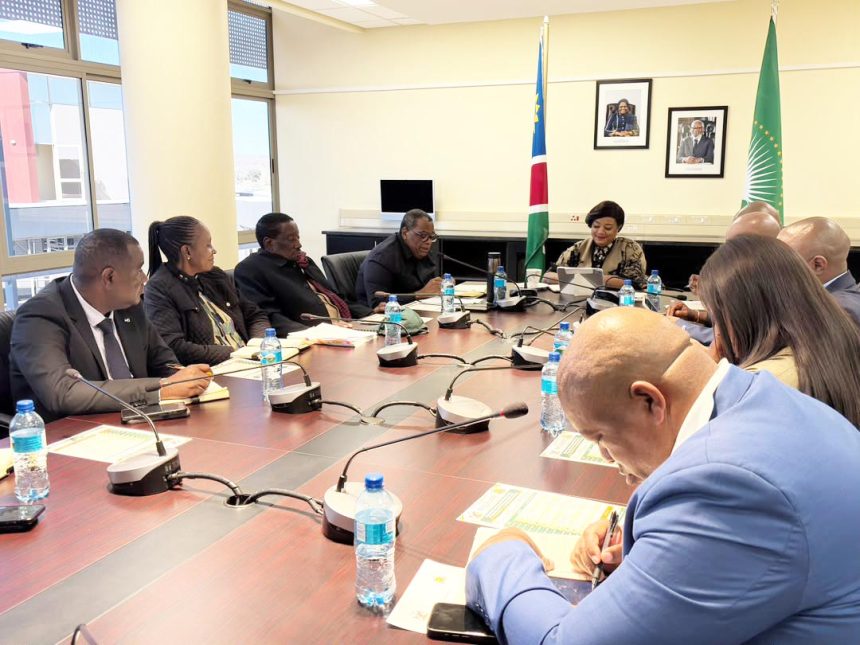
NKURENKURU – Focal Point and CEO of the African Peer Review Mechanism (APRM) National Secretariat, Lineekela Mboti, says the regional consultation in Nkurenkuru has highlighted governance gaps and serious barriers faced by people with disabilities.

The meeting forms part of the national validation process for the Draft Progress Report, following its launch by former president Nangolo Mbumba in March 2024.
Mboti said the aim is to ensure the document provides an accurate reflection of the progress achieved in implementing APRM recommendations at both national and regional levels.

He explained that the original APRM assessment focused on four thematic areas.
“We did the report on democracy and political governance, how we are performing in terms of elections, rule of law, and everything to do with democracy and political governance,” he said.
“The other one was on economic governance and management, then corporate governance, specifically how the private sector works closely with the government, and then socio-economic development; how we are taking care of the vulnerable, disabled, and gender and all those.”
Mboti said Namibia chose to integrate APRM recommendations into its planning frameworks.
“We thought the only way we could implement this report was to integrate these recommendations into NDP6,” he said. But he warned that decentralisation remains a major governance concern.
“We must decide what exactly we are decentralising,” he said.
Kavango West chief regional officer, Matheus Singambwe, told the meeting that facilities for learners with disabilities are inadequate.
“We are trying to accommodate them at Kahenge Combined School. However, the facility is just a bit small. We just need to do more and expand it,” he said.
Singambwe added that some parents are still shy to bring children with disabilities out in public.
Kavango West Regional Council chairperson and Nkurenkuru constituency councillor, Fillipus Tenga, said poverty, undocumented residents and pressure from people crossing from Angola are deepening vulnerability.
“You will find people who are stateless and undocumented; all these people do not have even a single document,” he said, warning that they also miss out on social grants.
Participants recommended that governance shortcomings, disability barriers and other concerns raised in Nkurenkuru be explicitly captured in the APRM report so that concrete mechanisms can be put in place to address them.
-Nampa