

Unregistered weight-loss, diabetes medicines face crackdown
Auleria Wakudumo The Namibia Medicines Regulatory Council has raised the alarm over the growing importation, sale, advertising and distribution of unregistered GLP-1 and peptide-containing medicines being marketed for weight loss and diabetes. The council said the products are increasingly being promoted through social media, online vendors and informal markets, with some cases involving healthcare establishments.... The post Unregistered weight-loss, diabetes medicines face crackdown appeared f
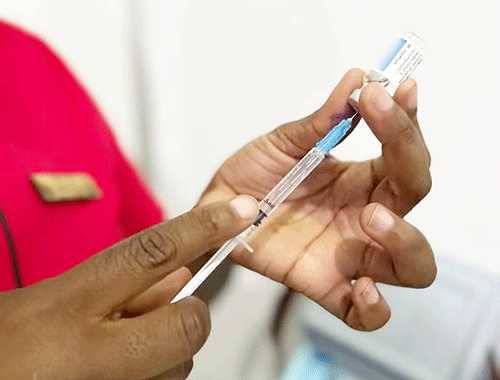
The Namibia Medicines Regulatory Council has raised the alarm over the growing importation, sale, advertising and distribution of unregistered GLP-1 and peptide-containing medicines being marketed for weight loss and diabetes.
The council said the products are increasingly being promoted through social media, online vendors and informal markets, with some cases involving healthcare establishments.
The warning comes as demand for medicines associated with weight management and diabetes treatment continues to attract public attention, raising concerns that consumers may obtain products outside Namibia’s regulated pharmaceutical system.

In a public notice, registrar of medicines Frieda Shigwedha said the council had observed an increase in the unauthorised importation, advertising, distribution, prescribing, dispensing and sale of GLP-1 and peptide-containing medicines marketed for weight loss and diabetes.
The products are being sold or promoted under several names, including Ozempic, Wegovy, Mounjaro, Saxenda, Rybelsus, Upret 30 and TB500+BPC-157.
The notice lists active ingredients associated with the products as semaglutide, tirzepatide, liraglutide and retatrutide.
They are also being marketed using terms such as GLP-1 slimming injections, weight-loss peptides, skinny jabs and fat-loss injections.
This makes the products particularly attractive to consumers looking for weight-loss solutions.
However, Shigwedha stressed that the central problem is not simply the use of medicines containing these substances, but the unlawful supply and promotion of products that have not been registered or authorised through the appropriate regulatory processes.
She said unregistered medicines can present serious risks because they may contain the wrong active ingredient or strength.
They may also be contaminated, falsified or counterfeit or manufactured without appropriate quality controls.
This means consumers may not know exactly what they are injecting or taking, how much of the active ingredient they are receiving or whether the product has been manufactured under acceptable standards.
Shigwedha said international regulators have documented serious adverse events linked to unregistered and counterfeit GLP-1 medicines, including dosing errors, contamination and hospitalisation.
She further warned that some GLP-1 and peptide-containing products promoted for weight loss may still be undergoing clinical investigation.
Others may not yet be authorised for the specific purposes for which they are being marketed, while some may be intended solely for research purposes.
Such products, the Namibia Medicines Regulatory Council (NMRC) said, should not be supplied or promoted outside the legal framework governing clinical trials and regulatory authorisation.
The warning is particularly significant for people living with diabetes, who may be seeking treatment or alternative products outside the conventional healthcare system.
NMRC specifically identifies diabetes among the conditions for which these unregistered medicines are being marketed.
Shigwedha clarified that the notice should not be interpreted as prohibiting lawful pharmacy compounding.
She said the Medicines and Related Substances Control Act distinguishes between the registration of medicines and the lawful professional practice of pharmacy.
Lawful pharmacy compounding undertaken by an authorised pharmacist in accordance with the Act and other applicable laws remains permitted.
However, unlawful manufacture, importation, commercial supply, distribution or advertising of unregistered medicines remains subject to enforcement.
The NMRC has consequently warned that those involved in prohibited activities could face serious consequences.
The importation, manufacture, distribution, sale, advertising, prescribing, dispensing and commercial supply of unregistered medicines contrary to the Act are prohibited.
Individuals or businesses found contravening the law may be subjected to inspection, seizure of products, prosecution and penalties prescribed under the legislation.
The regulator has made it clear that no grace period applies.
Healthcare professionals have also been placed under scrutiny.
It reminded them that advertising scheduled medicines is regulated under the Medicines and Related Substances Control Act.
Promotion of unregistered medicines could constitute both a statutory offence and unprofessional conduct under legislation governing their respective professions.
The council is, therefore, calling on healthcare professionals and other stakeholders to remove promotional material relating to unregistered products from websites and social media platforms.
Healthcare professionals are also urged to counsel patients currently using such products and, where appropriate, direct them towards registered alternatives.
Suspected unlawful importation, sale, distribution or advertising of unregistered medicines should be reported to