

Hai//om demand future beyond marginalisation
Auleria Wakudumo For generations, the Hai//om lived with the consequences of displacement, poverty and limited access to economic opportunities. This is all while trying to preserve a cultural identity deeply rooted in the land in and around Etosha National Park. Today, their struggle is no longer only about survival. It is increasingly about dignity, land,... The post Hai//om demand future beyond marginalisation appeared first on New Era .
For generations, the Hai//om lived with the consequences of displacement, poverty and limited access to economic opportunities.
This is all while trying to preserve a cultural identity deeply rooted in the land in and around Etosha National Park.
Today, their struggle is no longer only about survival. It is increasingly about dignity, land, livelihoods, education, housing and the right to participate meaningfully in Namibia’s development.

The Hai//om living in Etosha have heard promises of development, improved services and greater benefits from the natural resources and tourism activities taking place on their ancestral land.
For them, the question is no longer about what has been promised; it is about what has changed?
The community has raised a series of concerns over access to basic services, employment opportunities, electricity, health care, traditional representation and participation in projects operating inside and around Etosha National Park.
Their concerns come at a time when government continues to emphasise the importance of empowering marginalised communities and ensuring that they benefit from economic activities taking place on or near their traditional lands.
VP visit
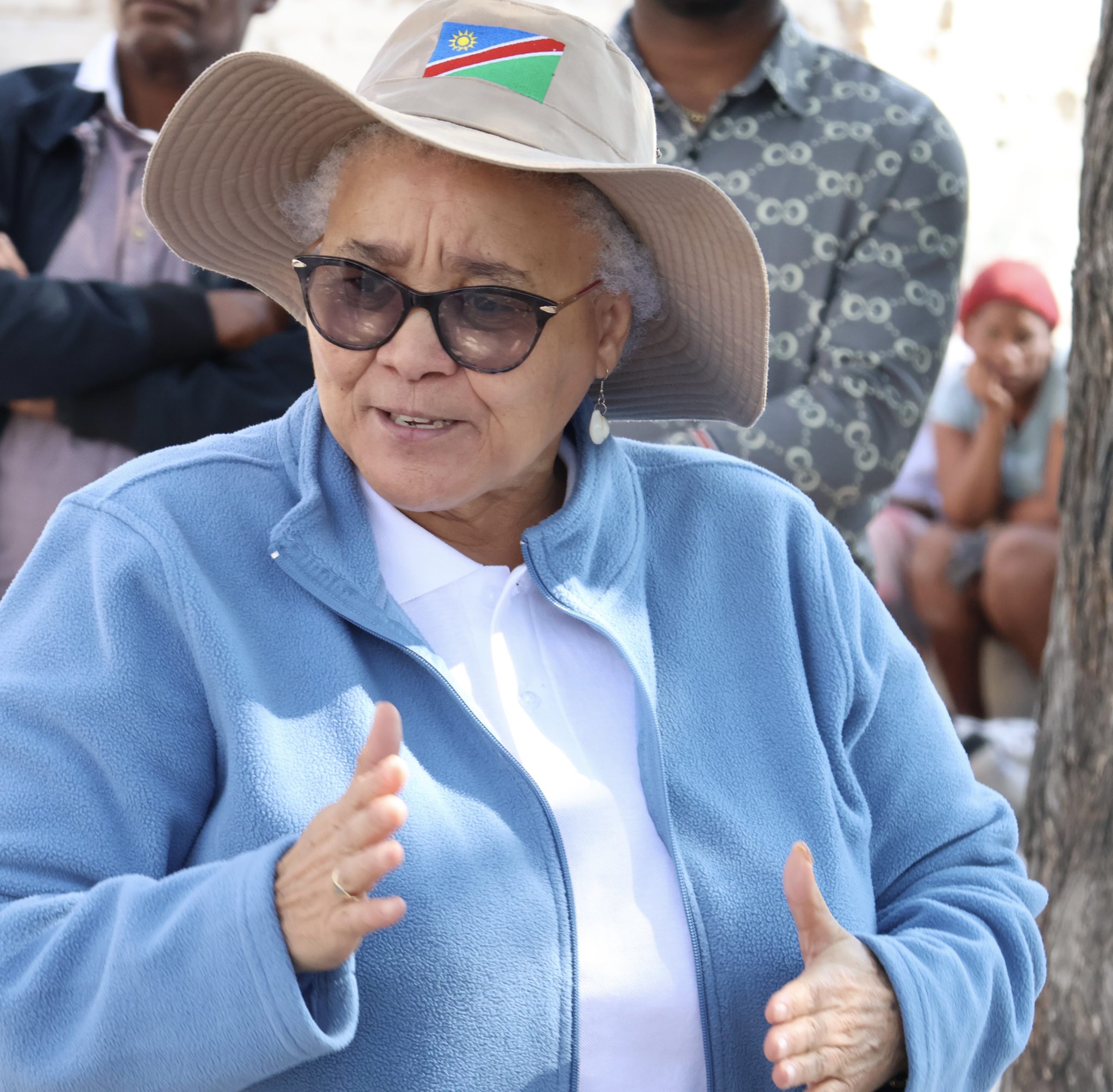
The Vice President Lucia Witbooi recently visited the Hai//om community in the Oshana and Kunene regions, where she visited Ombika and the resettlement farms of Serringkop, Bellalaika and Nuchas.
The visits formed part of a broader government effort to move beyond isolated interventions and develop a coordinated response to the challenges facing historically marginalised communities.
Yet, according to the complaint letter from the Hai//om community in Etosha National Park seen by this publication, many of these benefits have not translated into meaningful improvements in their daily lives.
One of the most pressing concerns is the alleged exclusion of sections of the community from employment opportunities linked to projects in Etosha. Residents said projects such as OTESA, NEXUS, Dolomite and Tulipamwe have created opportunities, but the process of recruitment and consultation has allegedly not been inclusive.
The community said Ombika and Okaukuejo are traditionally represented by two recognised headmen, yet contractors and project managers allegedly communicate primarily with one traditional authority.
They fear this approach is creating divisions and denying qualified community members access to employment.
The residents are calling for contractors to engage both headmen equally and ensure that job opportunities are distributed fairly according to skills and need.
For the community, employment is more than simply earning an income.
It represents an opportunity for young people and families to become economically independent while remaining connected to their ancestral home.
The electricity situation has also become a source of frustration.
In a letter contained in the community’s submissions, residents raised concerns about the halting of an electricity installation project at Ombika. The project, which was intended to benefit the Hai//om community, had reportedly reached the stage where Cenored had drilled boreholes and started the installation process, including supplying electricity to some corrugated houses.
Its reported suspension has left residents questioning why the project was stopped and when, if ever, it will resume.
The community is demanding clarity from Cenored and other authorities on the reasons for the halt, the next steps and a timeline for completion. In February, the vice president convened a consultative meeting with relevant ministries to discuss a coordinated government response.
A multidisciplinary technical team was subsequently sent to assess conditions at Namutoni, Halali, Okaukuejo, Ombika and the Hai//om resettlement farms bordering the national park. The findings, according to Witbooi, reinforced the need for a comprehensive and practical intervention rather than piecemeal solutions.
The government now intends to develop a Livelihoods Options and Development Plan for the Hai//om community.
Residents have also questioned changes to access arrangements at Etosha, particularly the closure of a smaller gate that they say was historically used by residents to enter and leave the area.
They argued that some residents work early or return late from town and are left without convenient access when gates are locked.
The community said the gate had traditionally remained open and that residents were previously able to move in and out freely.
They have questioned whether security measures, including cameras installed in the area, justify the closure.
Sensitive
The issue has become particularly sensitive because the community maintains that its relationship with the land predates the establishment and administration of the national park.
For the Hai//om, Etosha is not simply a tourism destination. It is part of their history, identity and ancestral connection.