
The Literature and Legacy of Dambudzo Marechera
The National Library in Windhoek will host literary enthusiasts, writers and academics from 17h30 tomorrow to commemorate one of Africa’s most gifted, provocative and unconventional literary voices, Dambudzo Marechera. Marechera was a Zimbabwean novelist who won critical acclaim for his short-story collection, ‘The House of Hunger’, a term he used to describe life under colonial […] The post The Literature and Legacy of Dambudzo Marechera appeared first on The Namibian .
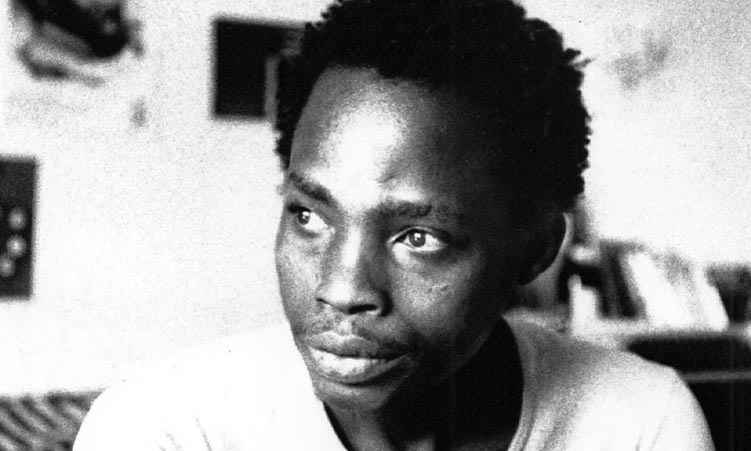
The National Library in Windhoek will host literary enthusiasts, writers and academics from 17h30 tomorrow to commemorate one of Africa’s most gifted, provocative and unconventional literary voices, Dambudzo Marechera.
Marechera was a Zimbabwean novelist who won critical acclaim for his short-story collection, ‘The House of Hunger’, a term he used to describe life under colonial rule in his country.
Commemorating the 39th anniversary of his death, the event, organised by the Indie Network Namibia and Africa Blossom Publishers Concept Note, is an opportunity to reflect on the richness, diversity and complexity of African literature.

Marechera challenged literary conventions, questioned political orthodoxies, and resisted simplistic definitions of African identity, making his work uniquely relevant and timeless, the organisers say.
Celebrated internationally for his originality and fearless imagination, Marechera’s work continues to generate debate across literary, academic and cultural circles.
Following a troubled period at Oxford University in which he was expelled for trying to set fire to the college building, Marechera became the first African writer to win the Guardian Prize for First Fiction in 1979.
At the ceremony dinner, Marechera shocked attendees when he hurled plates at a chandelier, symbolising the controversy that marked his life.
He returned to Zimbabwe in 1981, where his mental and physical condition deteriorated, and he was often homeless. He died in Harare in 1987 at the age of 35.
Tomorrow evening’s event will include a keynote presentation by journalist and literature enthusiast Kelvin Chiringa, examining Marechera’s influence and continuing relevance.
Chiringa describes Marechera as a consequential literary figure who pushed the bar creatively and intellectually.
“His unusual, avant garde, or rather post-modernist approach to writing was initially frowned upon as foreign and very European, if not decadent and unnecessary for an emerging continent, yet he was able to re-imagine the African novel in terms of style and structure. He was able to bring fresh ideas in the manner we composed our poems and developed themes in our short stories,” Chiringa says.
He says Marechera’s writing posed difficult questions from a position of radical doubt.
“He sought to find a place for the writer in society and political discussions of post-colonial Africa, thereby building strong foundations for protest literature … putting him in the direct line of fire from the censorship board of newly independent Zimbabwe and its political establishment. His controversial views on independence and the role of literature in building a state ultimately became relevant years later as many began to question what benefit independence had brought,” Chiringa says.
“Dambudzo brought the philosophy of existentialism home for the African reader. All his life, he fought against systems and beliefs that sought to label and control individuals in categories of race and other rigid tags in a manner that was limiting to one’s individual creative impulse.
“Marechera refused to be identified as an “African writer” but rather a writer just like any other. That did not come from self-hate, it derived from an attempt to dismantle the concept of “othering” a people’s intellectual property and contribution to world literature in a manner that was demeaning,” Chiringa says.
Marechera’s radical work also illustrates the pitfalls of intellectual radicalism, he adds.
“While it is important to be extreme and passionate in our articulation of social and political realities, there should also be a place for moderation. Above all, Dambudzo affirms that literature and art must always demand a place in society and help shape the narrative, ask the difficult questions and depict the good and bad about social, political and economic systems.”
The event will also include selected readings from Marechera’s writings, as well as a panel discussion including professor Collen Sabao from the University of Namibia, writer Rémy Ngamije, and the Namibia University of Science and Technology’s professor Nelson Mlambo.
“I am confident that this event will stimulate far-reaching conversations, not only about Dambudzo Marechera and his literary legacy, but also about the state and trajectory of African literature and what this means for Namibia’s emerging creative economy,” says Samuel Mayinoti of Blossom Publishing.
Increasingly, literature is being appreciated not only as a vehicle for education, identity and cultural expression, but also as an exportable creative product capable of generating sustainable livelihoods for writers, publishers and other creative practitioners, say the organisers.
Remembering Marechera is, therefore, not merely an act of commemorating an individual writer; it aligns with Namibia’s growing recognition of the creative and cultural industries as important contributors to national development.
For further inquiries