
Botswana parliament charts course for stronger lawmaking
Moses Magadza GABORONE – The Parliament of Botswana has embarked on a drive to strengthen legislative excellence, democratic accountability and evidence-based lawmaking. Parliamentary leaders and regional partners have since declared that continuous learning has become indispensable for modern legislatures facing increasingly complex national and global challenges. The week-long Pre-Winter Capacity Building Seminar for Members of... The post Botswana parliament charts course for stronger lawmaki
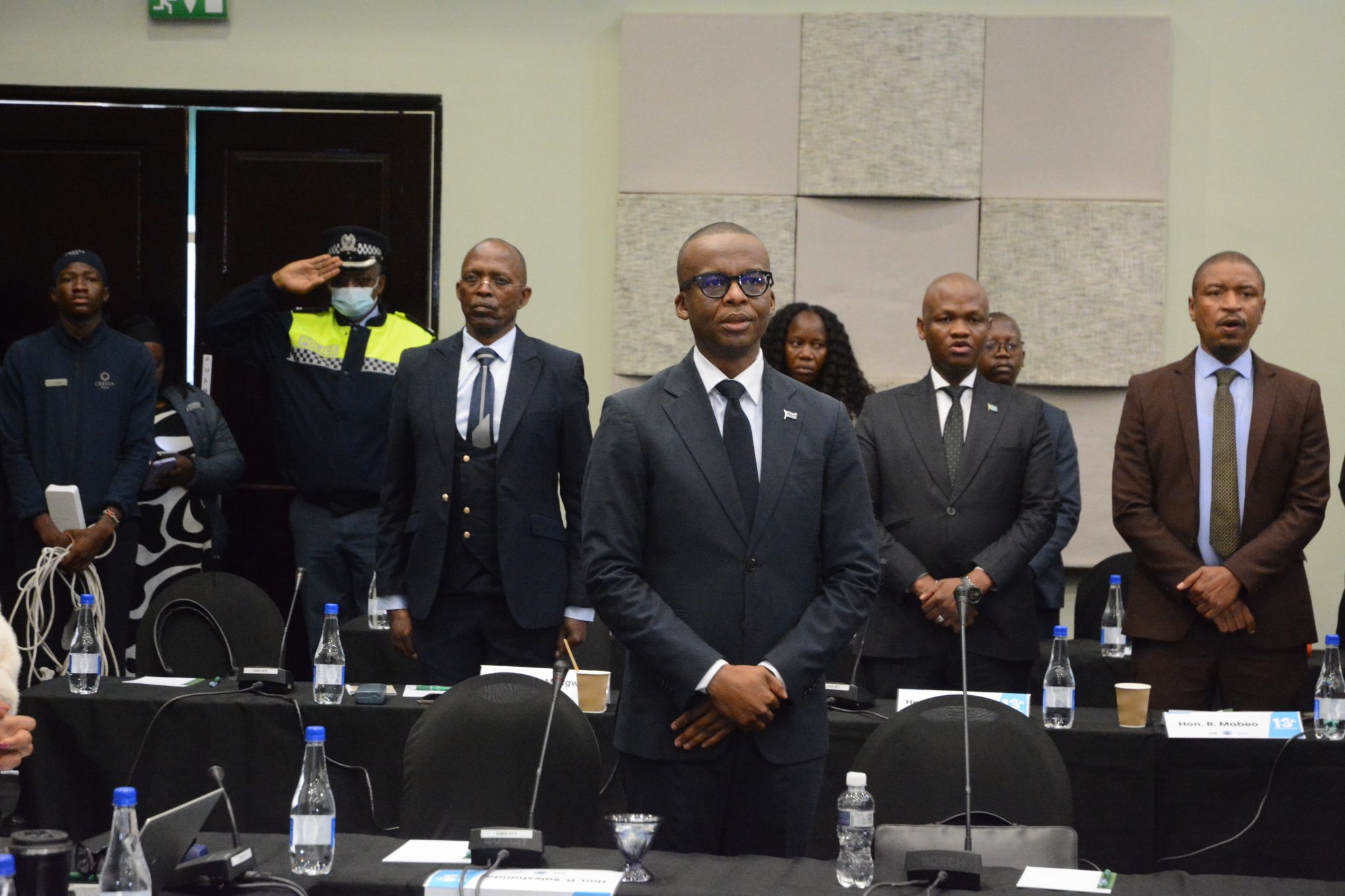
GABORONE – The Parliament of Botswana has embarked on a drive to strengthen legislative excellence, democratic accountability and evidence-based lawmaking.
Parliamentary leaders and regional partners have since declared that continuous learning has become indispensable for modern legislatures facing increasingly complex national and global challenges.
The week-long Pre-Winter Capacity Building Seminar for Members of the 13th Parliament, convened by the National Assembly in collaboration with the Southern African Development Community Parliamentary Forum (SADC PF), opened on recently with a strong call for legislators to sharpen their skills ahead of the forthcoming parliamentary session and position Parliament at the centre of Botswana’s democratic and developmental transformation.

Botswana’s vice president and minister of finance, the Honourable Ndaba Nkosinathi Gaolathe, attended the official opening.
Held under the theme ‘Fostering Dialogue among Legislators to Strengthen Legal Frameworks for a New Botswana’, the seminar is examining a broad range of issues, including legislative scrutiny, parliamentary procedure, artificial intelligence, climate change, collaboration with civil society, gender equality and sexual and reproductive health and rights (SRHR).
Opening the seminar, speaker of the national assembly Dithapelo Keorapetse said Botswana’s 13th parliament carries enormous public expectations and must rise to meet them through professionalism, integrity and continuous learning.
“Parliament occupies a unique position in our democratic system, and the 13th Parliament occupies a unique position, and the expectation is high to perform and deliver,” he said.
He described parliament as the constitutional institution entrusted with making laws, scrutinising executive action, representing citizens and safeguarding constitutional governance and said its effectiveness ultimately depends on “the knowledge, skills, ethics and commitment of those who serve within it”.
He reminded legislators that learning and leadership are inseparable, quoting former United States president John F Kennedy’s observation that “leadership and learning are indispensable to each other”.
“The programme before us reflects the evolving demands placed upon modern legislatures,” Keorapetse said and noted that effective lawmaking requires resilience, openness to new ideas and continuous adaptation to changing realities.
He said parliament must also embrace emerging technologies responsibly.
He observed that artificial intelligence offers opportunities to strengthen parliamentary research, legislative drafting, committee work, records management and public engagement.
“While embracing these innovations, we must also be wary and remain committed to principles of transparency, accountability, privacy, and ethical governance,” he cautioned.
The speaker further stressed Parliament’s responsibility to enact inclusive legislation that advances sexual and reproductive health and rights, gender equality, youth empowerment and the fight against gender-based violence.
“Parliamentarians remain actively engaged with constituents, diligently reviewing legislative proposals and policy initiatives that influence SRHR, address early and unplanned pregnancies, improve maternal care, and support key populations,” he said.
He also linked parliament’s legislative responsibilities to Botswana’s climate commitments and pointed to the development of a national environmental, social and governance strategy that will support sustainable development and reinforce the country’s obligations under the Paris Agreement.
For the clerk of the national assembly, Gabriel Malebang, the seminar represents a deliberate investment in parliament’s long-term institutional strength.
“Effective legislation begins with capable and well-prepared legislators,” he said.
Malebang explained that the Office of the Clerk has embarked on an extensive programme of continuous professional development for members and parliamentary staff in pursuit of the speaker’s vision of a high-performing Parliament.
He said the objective is to ensure members enter every parliamentary session fully equipped to address emerging governance challenges through informed debate, effective oversight and quality legislation.
Among the seminar’s objectives are strengthening members’ understanding of parliamentary standing orders, legislative scrutiny, parliamentary etiquette, committee work, public engagement, artificial intelligence, climate governance, gender equality and youth SRHR.
Malebang also acknowledged the support of the SADC Parliamentary Forum, the Inter-Parliamentary Union, Friedrich-Ebert-Stiftung (FES), the United Nations Development Programme (UNDP) and the Parliamentary Cooperation Project funded by the French Ministry of Foreign Affairs and supported by Expertise France. nDelivering solidarity remarks, SADC Parliamentary Forum secretary general Boemo Sekgoma desc