

Govt urged to ditch Kavango water link project
Governor questions if project will benefit community The Namibian Chamber of Environment (NCE) has urged the government to abandon plans to draw water from the Kavango River to supplement water supplies to Windhoek and central areas. The chamber warned that the river is already exploited by unmonitored green schemes and farms. NCE chief executive Chris […] The post Govt urged to ditch Kavango water link project appeared first on The Namibian .
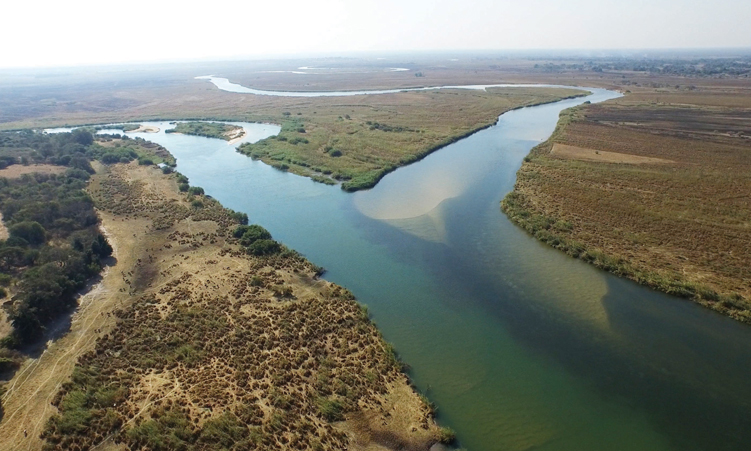
Governor questions if project will benefit community
The Namibian Chamber of Environment (NCE) has urged the government to abandon plans to draw water from the Kavango River to supplement water supplies to Windhoek and central areas.
The chamber warned that the river is already exploited by unmonitored green schemes and farms.
NCE chief executive Chris Brown says the proposed Kavango Link project is based on a decades-old plan that no longer reflects current environmental, economic and regional realities.
Brown says this in an open letter titled ‘Namibia can do better than the Kavango Link project’ addressed to prime minister Elijah Ngurare this week.
The Kavango Link is a long-standing government plan to transfer water from the Kavango River near Rundu to the central parts of Namibia, including Windhoek, through a pipeline to Grootfontein that would connect to the existing Eastern National Water Carrier.
According to Brown, the project is environmentally unsustainable and could strain relations with neighbouring Botswana.
“As an umbrella organisation representing Namibia’s environmental civil society sector, the NCE is concerned about the plan to abstract more water from the Kavango River to supplement Windhoek and the broader central areas of the country.
“This plan, developed in 1974, is now short-sighted, environmentally damaging, and sets Namibia up for conflict with Botswana.
The world and Namibia has moved on over the past 52 years and requires new, integrated and long-term approaches that build strong relationships with neighbouring countries,” he says.
Brown says by adding another large pipeline from the river to feed Windhoek and surrounding areas, Namibia is participating in a ‘race to the bottom’.
“If Namibia is to keep its international reputation intact, it cannot continue with the Kavango Link plan.
During future severe region-wide droughts – which are inevitable and likely to intensify due to climate change – it is inevitable that Windhoek will be water stressed at the same time that the Kavango River is receiving reduced inflows from Angola,” he says.
“In such a time of severe water stress, how will the increased water use by Namibia and Angola be viewed by Botswana, as they watch their prime tourist attraction and economic pillar, the Okavango Delta, start to shrink?”
RECOMMENDATIONS
Brown advises the government to abandon the Kavango Link and instead expand Namibia’s desalination capacity by developing a large plant or modular plants on the coast.
He proposes pumping desalinated water to Windhoek using solar power before piping it to Gaborone.
“Unlike the Kavango River, the Atlantic Ocean has no risk of running dry.
A large desalination plant or series of modular plants would not only supply Windhoek with water – it could be piped all the way to Gaborone in Botswana. This bold vision for the future comes with many benefits for both countries,” he says.
Brown urges the government to attract international climate finance and private-sector investment through public-private partnerships.
He further proposes adding a small nuclear power plant to provide reliable energy for desalination and pumping.
“The governments could invest in a small nuclear power plant (footprint of around 20 hectares) to add to the solar plant, providing 24-hour energy for both desalination and pumping, plus considerable surplus energy for both countries.
“This carbon-neutral power plant would be cooled using mostly brine water that is a byproduct of desalination.
The secure baseload of nuclear energy would help ensure the stability of national electrical grids in both Namibia and Botswana, allowing further expansion of renewable solar energy,” he says.
The Cabinet in February 2024 approved the prioritisation of the Kavango Link as part of Namibia’s long-term water-security plans and instructed the Ministry of Agriculture, Fisheries, Water and Land Reform to proceed with the project and engage the other countries sharing the river.
Namibia Water Corporation estimates the project could cost about N$7 billion.
Speaking to The Namibian yesterday, Kavango East governor Julius Hamunyera questioned how the community will benefit from the project, adding that the river dries up even in the rainy season.
“When you have such a project, what is the benefit of that project to the community? Remember, we are sharing this river with three countries, including Namibia.
My view is that little did we know that this river goes completely dry at one point, even if it is not the rainy season.
“Are we sure that it is sustainable? Yes, it is approved, but what will be the benefit for the local people? Did we check the lifespan of the river and for how long it will be there for?” he asked.
Hamunyera said thorough consultation with all community residents and neighbouring countries needs to be done, adding that that the community needs to understand the project.