

On the spot with Lahja Nashuuta – Changing the narrative on mental healthcare
The mental healthcare situation in Namibia is disturbing, with a country where a third of the population suffers from one form of mental illness or another, but only a few receive help. In 2025 alone, over 91 000 patients were treated for mental illnesses ranging from depression, substance abuse, bipolar disorder, schizophrenia and epilepsy, while... The post On the spot with Lahja Nashuuta – Changing the narrative on mental healthcare appeared first on New Era .
The mental healthcare situation in Namibia is disturbing, with a country where a third of the population suffers from one form of mental illness or another, but only a few receive help. In 2025 alone, over 91 000 patients were treated for mental illnesses ranging from depression, substance abuse, bipolar disorder, schizophrenia and epilepsy, while close to 600 people died. Namibia has only one referral psychiatric hospital to cater for the whole country.
Against this backdrop, the shortage of psychiatrists and other mental health professionals remains a major concern, with many Namibians struggling to access timely and appropriate care. The limited availability of specialised services, particularly outside Windhoek, coupled with persistent stigma surrounding mental illness, continues to make it difficult for many people to seek and receive the help they need.

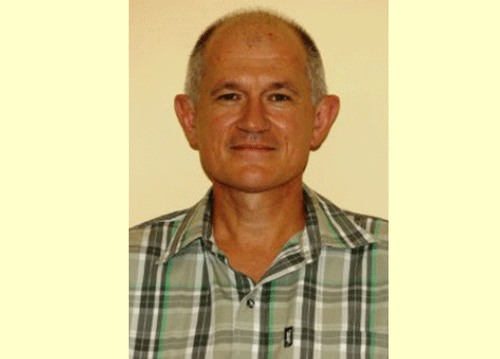
This week, New Era Journalist and Acting Deputy Editor for Kundana, Lahja Nashuuta (LN), sat down with medical doctor Manfred Janik (JK), Senior Lecturer in Psychology and Social Work in the Faculty of Health Sciences and Veterinary Medicine at the University of Namibia, to gain insight into the current challenges facing mental healthcare in the country, as well as possible solutions.
LN: Namibia has a limited number of psychiatrists and other mental health specialists. What factors are contributing to this shortage and why is psychiatry not attracting enough medical students as a career choice?