

Vet budget puts beef exports at risk
The Directorate of Veterinary Services (DVS) in the Ministry of Agriculture, Fisheries, Water and Land Reform has exhausted its 2026/27 operational budget, putting prerequisite European Union (EU) export farm inspections under pressure. According to the Namibia Agricultural Union (NAU), EU-approved livestock farms must undergo annual inspections by a state veterinarian to maintain their EU certification […] The post Vet budget puts beef exports at risk appeared first on The Namibian .
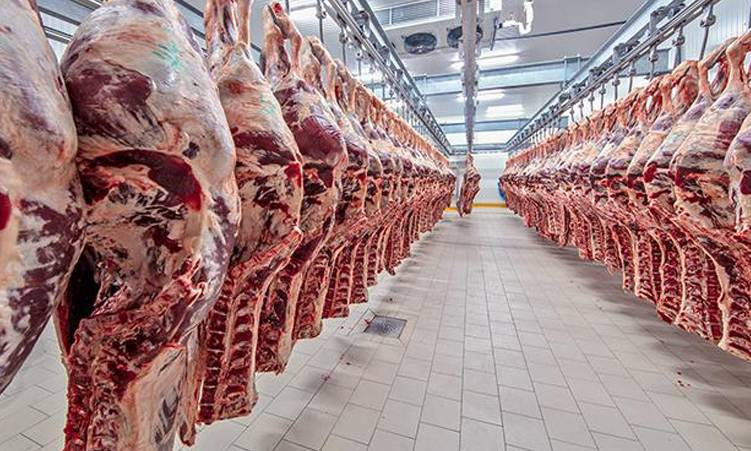
The Directorate of Veterinary Services (DVS) in the Ministry of Agriculture, Fisheries, Water and Land Reform has exhausted its 2026/27 operational budget, putting prerequisite European Union (EU) export farm inspections under pressure.
According to the Namibia Agricultural Union (NAU), EU-approved livestock farms must undergo annual inspections by a state veterinarian to maintain their EU certification and, with it, access to important export markets.
“However, these inspections came to a halt earlier this year after the DVS said its operational budget for this service had been exhausted,” the NAU says.

This placed producers who export to the EU under considerable pressure. If inspections are not carried out on time, certification may lapse, and producers may no longer be able to slaughter livestock at export-approved abattoirs.
“This could in turn, affect the industry, the abattoirs, and Namibia’s ability to meet its international export obligations,” the NAU says.
EU chargé d’affaires Ian Dupont says trade in livestock and animal products is necessarily subject to strict sanitary and phytosanitary, animal-health and food safety requirements.
“These requirements are intended to protect the importing country from risks such as the introduction or spread of animal diseases, food-borne hazards, residues and other risks associated with products of animal origin,” he says.
The DVS must have an effective system of registration, traceability, disease surveillance inspection and certification covering the animals, he adds.
“For the farmer, the simplest way of looking at it is that the health guarantee attached to a piece of Namibian beef exported to Europe starts on the farm, not at the abattoir,” Dupont says.
Approximately 1 500 to 2 000 Namibian producers supplying or wishing to supply animals into the EU export chain undergo these inspections each year, Dupont says.
The Livestock Producers Organisation (LPO) urgently brought the matter to the relevant role-players and following discussions between organised agriculture, DVS and the Livestock and Livestock Products Board, a temporary solution has been reached to prevent disruption to exports.
Dupont says the inspection interval is determined by the level of risk and that, in Namibia’s case, where transboundary livestock diseases such as foot-and-mouth disease (FMD) and bovine lung sickness occur in the region, inspections are required at least annually.
Dupont says an outbreak can have devastating consequences for farmers in an importing country.
“After 14 years without an FMD outbreak, the outbreaks in Germany, Hungary and Slovakia in 2025 resulted in 15 923 [head of] cattle being culled,” he says.
He says if the DVS skipped an inspection, this would mean animals from farms not inspected and certified would not be eligible for the EU market.