
US pledges support to help Namibia turn oil discoveries into lasting prosperity
Staff Reporter THE United States has pledged to support Namibia in translating its offshore petroleum discoveries into long-term economic benefits, including jobs for Namibians, opportunities for local businesses, skills development and broader economic growth. U.S. Ambassador to Namibia John Giordano said Namibia’s offshore discoveries have placed the country on the cusp of a potentially transformative ... The post US pledges support to help Namibia turn oil discoveries into lasting prosperity
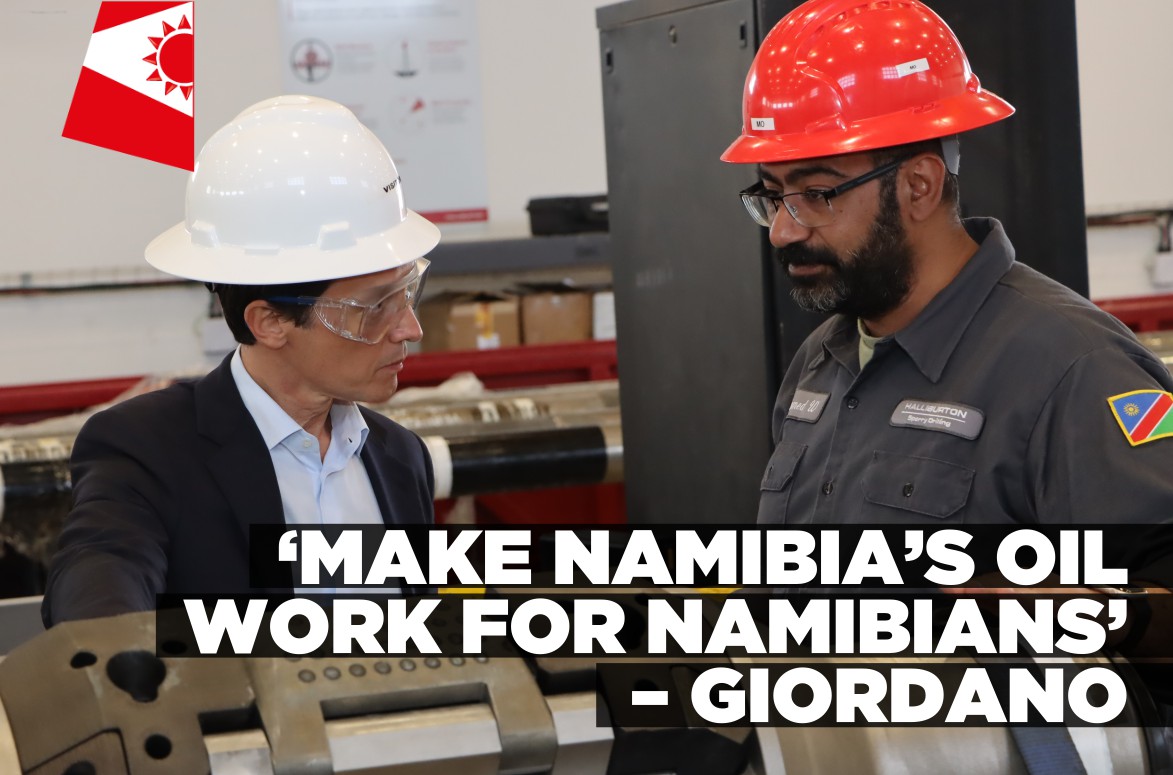
THE United States has pledged to support Namibia in translating its offshore petroleum discoveries into long-term economic benefits, including jobs for Namibians, opportunities for local businesses, skills development and broader economic growth.
U.S. Ambassador to Namibia John Giordano said Namibia’s offshore discoveries have placed the country on the cusp of a potentially transformative economic era, but cautioned that reaching a Final Investment Decision (FID) would only mark the beginning of the work needed to turn petroleum resources into lasting national prosperity.
In a statement issued ahead of the Namibia Oil and Gas Conference, Giordano said the conference’s theme, “Making Namibia’s Oil Work for Namibians”, captures the central challenge facing the country.

“Namibia’s offshore discoveries have put the country on the cusp of a potentially transformative economic era. But a Final Investment Decision is not the finish line. It is the starting gun,” he said.
Giordano said Namibia’s oil potential lies in technically challenging offshore environments, with some discoveries located up to 200 kilometres offshore and at unprecedented depths.
He said moving from exploration to production would require substantial capital, technical expertise, infrastructure and institutional conditions that provide long-term investors with confidence.
U.S. oilfield service and technology companies, including Baker Hughes, Halliburton, SLB and ABS, are already operating in Namibia, providing technology and expertise to support offshore exploration and development.
Giordano also highlighted the involvement of major international operators, including Chevron, Shell, TotalEnergies and Rhino Resources, in appraising discoveries in the Orange and Walvis basins, with first production expected by 2030.
He said the development of the petroleum sector must go beyond extracting oil and should create opportunities for Namibian workers and businesses.
“Namibia’s insistence that petroleum development generate local jobs, local businesses, and local industrial capacity is not a constraint on investment. It is an alignment of interests,” Giordano said.
He cited training and supplier development initiatives by American companies as examples of how local participation could be strengthened.
Baker Hughes has organised training programmes to prepare Namibian suppliers to work with oil and gas companies, while Halliburton has co-funded a university technology centre focused on geoscience education and research.
Giordano said American companies were also investing in local talent, skills transfer and domestic supply chains.
Through Fulbright exchanges, the U.S. Government is supporting the establishment of Namibia’s first petroleum engineering programme at the University of Namibia, which is expected to produce engineers qualified to work with major oil companies and oilfield service providers.
The ambassador also identified infrastructure as a critical component of Namibia’s petroleum ambitions, particularly the Port of Walvis Bay and proposed regional transport and energy corridors.
He said a Southern Africa Energy Corridor anchored at Walvis Bay and connected by rail and road networks to Botswana, Zambia and other markets could help Namibia maximise the wider economic benefits of its energy resources.
“Landlocked resource-rich nations across Southern Africa gain a reliable, efficient, Atlantic-facing gateway to global markets. That is the multiplier effect of getting infrastructure right,” Giordano said.
He said the United States was supporting infrastructure corridors through commercial diplomacy and economic financing tools, pointing to the Lobito Corridor as an example of integrated corridor investment.
Giordano further highlighted the role of U.S. institutions, including the Export-Import Bank of the United States (EXIM), the U.S. International Development Finance Corporation (DFC) and the U.S. Trade and Development Agency (USTDA), in mobilising private capital and reducing investment risks.
He said these institutions could support commercially viable projects in energy, transportation, critical minerals and digital infrastructure.
According to Giordano, the United States has mobilised more than US$32 billion in critical minerals financing globally over the past six months.
He also pointed to the Forum on Resource Geostrategic Engagement (FORGE), aimed at strengthening resilient and transparent critical minerals supply chains, as well as Project Vault, which he described as the United States’ first civilian strategic reserve for critical minerals.
Giordano said Namibia was the type of partner these U.S. economic tools were intended to support.
He said decisions made in the coming months on how Namibia’s petroleum resources are developed, the terms under which they are developed and the partners involved would determine whether the discoveries translate into industries, jobs and long-term prosperity.